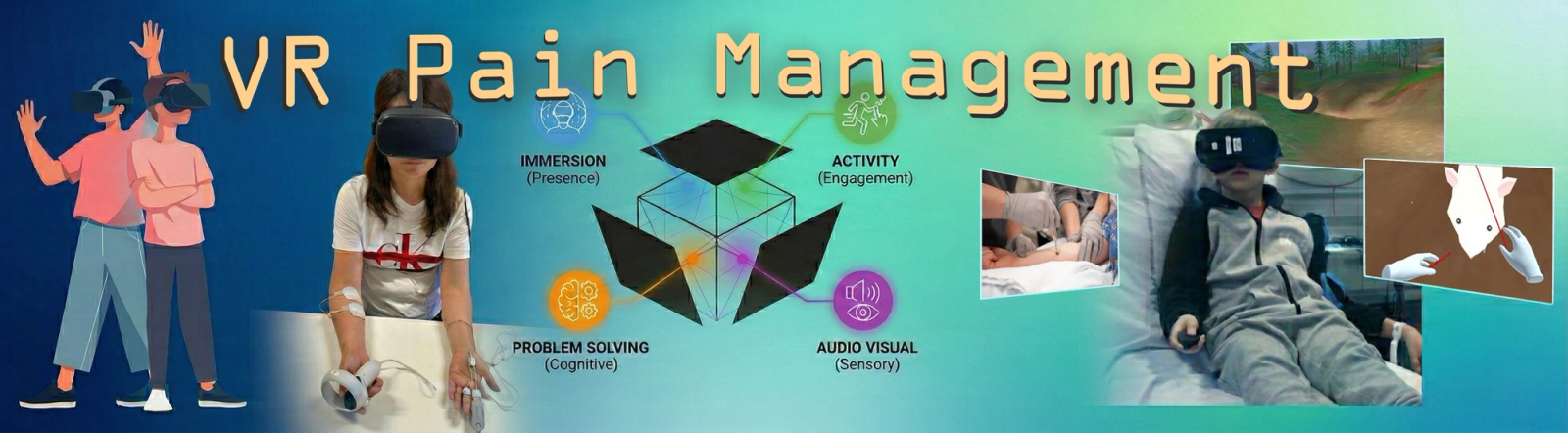
Virtual Reality for Acute Pain Management
Research ProjectAcute pain caused by medical procedures such as injections, dental work and minor surgery is normally managed with medication, but every option carries its own risk. Opioids can create a dependency that outlasts the procedure itself, non-opioid drugs are often not strong enough for severe pain, and local anaesthetics risk systemic toxicity if too much enters the bloodstream. These risks fall hardest on the patients already most vulnerable to a poorly managed procedure, including children and older adults, who are frequently left with no safe pharmacological option at all.
Virtual reality (VR) has emerged as a promising, drug-free alternative, immersing a patient in a computer-generated environment to draw attention away from the procedure while physiological sensors record their real-time response. Evidence confirms VR reliably reduces procedural pain, but the field still treats it as a single, undifferentiated intervention rather than identifying which of its components, such as interactivity, immersion or embodiment, actually drive the effect. This project addresses that gap directly, using physiological sensors and machine learning to decompose the VR experience and identify which elements relieve pain, and to what degree.